

Choosing care brings many questions. Our FAQs address the practical and emotional concerns families most often share, helping you feel informed, reassured and supported.
Respite Care, Personal Care, Residential Care, Autism & Learning Disabilities Care, Physical Disability Care, Physically Frail Nursing Care, EMI (Elderly Mentally Infirm) Nursing Care, Dementia Care and End-of-Life & Palliative Care.
See Seeking Care for more details.
Residential vs nursing care – what’s the difference?
We offer pre-admission care assessment; full involvement of the resident and family in decision-making; a review of medical, emotional and social needs; liaison with GPs, social workers, hospital teams and other relevant organisations; and trial stays and respite options.
Many families reach this decision gradually, often after noticing increasing care needs, safety concerns, or growing strain on family carers.
A care home can offer consistent support, reassurance and a safer environment when care at home is no longer able to meet someone’s needs.
It can also give a sense of security and companionship to counter loss of self- confidence, loneliness and anxiety.
Each case is different, and we have full and frank discussions with residents and/or their families as to our fees, and what they cover.
This covers fixed and additional charges, funding options (eg self-funding, NHS/local authority support), notice periods and fee reviews.
The fees are assessed depending on need, and vary due to the individual support provided.
For those who fall beneath the asset threshold, the relevant local authority will carry out a financial assessment of each individual.
We work in partnership with other funders of care such as ASC (Adult Social Care) and the NHS, and follow national guidelines and those of the Care Act.
Typical daily routines involve a combination of meals, activities and rest, with the focus always on the choice and independence of residents. Our activities programmes combine the social, creative and physical, with one-to-one support where required. Residents have full access to outdoor spaces and communal areas (based on safety assessments), and we fully respect lifestyle, cultural, religious and personal preferences.
Mandatory training, dementia-specific and other specialised training, ongoing professional development, full staffing ratios (day and night), presence of senior carers/managers on site, DBS checks and professional recruitment standards, and continuity of staff to promote familiarity and trust.
Training is essential for us to be able to deliver a safe and efficient service, and is designed to reduce organisational risks and comply with local/national policies and government guidelines.
All bedrooms are single occupancy, and most have ensuite facilities. All are decorated and furnished to a high standard, with the ability to bring personal belongings and furniture (within reason). We also operate as-flexible-as-possible visiting policies for family and friends.
We can and do have couples in all our homes, usually in adjoining rooms, but CQC regulations mean that each person has to have their own room. Occasionally, the couple might choose to use one room as a sitting room and one as a bedroom. However, in practice, most couples have different mobility/sleep /health needs, which make sharing a bedroom problematic. The most common scenario is that one person may have dementia, and the other person has a physical frailty, so they meet up in the sitting rooms during the day or share dining table. Personalisation can be as much as the resident wants with regard to small personal items (eg pictures, ornaments, small bookcases, etc).
Additional furniture (eg chairs, large bookcases, dressers, etc) can be brought in but must be fit for purpose, and meet infection prevention standards. All electrical items must be PAT tested (eg TV, radio, iPad) and no unsafe items like heated blankets or water bottles allowed. Kettles are discouraged and would be individually risk-assessed: it is not only for the safety of the resident, but also to prevent another resident picking it up and pouring hot water all over themselves.
We provide calm, patient, person-centred dementia care that respects identity, routines and life history. Familiar faces, consistent routines and dementia-friendly environments help residents feel safe, understood and supported every day.
Medication management procedures are discussed (and continually assessed) with the resident, families and relevant healthcare and social services professionals. The physical, mental and emotional wellbeing of our residents is paramount, with meticulous attention paid to nutrition, hydration and dietary needs, together with falls prevention and mobility support.
Our nursing care team is led by qualified nurses specialising in care of elderly, mental health issues and complex challenging behaviours. Similarly, our residential care teams are led by senior care staff with advanced training and specialist knowledge as care champions.
All of our homes and services are fully regulated by the independent Care Quality Commission (CQC). We regularly monitor safeguarding procedures, and make continuous improvement and audits. We also have a fully transparent complaints and compliments process.
Safety is carefully balanced with independence. Risk is assessed thoughtfully, so residents can continue to make choices, stay active and retain a sense of control over their lives.
Nutritionists in all our homes work alongside our chefs to provide tasty, calorie-dense and easy-to-eat meals particularly tailored to those with dysphagia (difficulty swallowing) or dementia-related dietary needs.
Many people with dementia forget to eat, lose interest in food, have trouble chewing or swallowing, or burn more energy from restlessness or pacing. Unintentional weight loss is very common and linked to faster decline, so all of these issues are addressed.
Families are warmly welcomed and encouraged to stay involved. We believe care works best when families and care teams work together, sharing information, reassurance and regular updates. We are happy to discuss visiting hours, shared mealtimes and other issues with you in person.
We offer regular care reviews and updates on health or wellbeing changes, including family meetings and feedback opportunities. There is a named key worker for each resident, and we encourage regular visits.
Yes, of course. We encourage visits, conversations and questions. Seeing a home, meeting the team and experiencing the atmosphere often brings reassurance and clarity when making such an important decision.
Care plans are flexible, and reviewed regularly. As needs change, support adapts – helping residents remain settled and supported without unnecessary disruption.
We provide sensitive, compassionate end-of-life care focused on comfort, dignity and emotional support. Families are supported throughout, with care delivered calmly and respectfully.
HomeTrust Care is an Employee Ownership Trust. This means the people caring for residents are the people guiding the future of the homes – creating stability, accountability and a deep personal commitment to quality care.
HomeTrust Care is proudly employee-owned. This means the people caring for your loved one are the same people shaping the future of the homes. Employee ownership creates stability, accountability and a deep personal commitment to care. It protects jobs, preserves culture and ensures decisions are made for the long-term benefit of residents, families and staff, not external investors.
HomeTrust Care is proud to have signed the Armed Forces Covenant, recognising and supporting members of the Armed Forces community, including veterans, reservists and their families.
This commitment reflects our values-led approach to care and employment, recognising the skills, resilience and dedication that service personnel bring. It strengthens our community and reinforces our promise to treat every individual with fairness, dignity and respect.

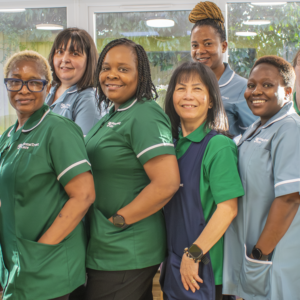

When my brother was in Parkfield, myself and my siblings were always made to feel welcome on visiting. We found if we did have any issues (which were always small), these were dealt with and resolved very quickly. My brother was given excellent care over the last few weeks of his life, being dealt with dignity, care and compassion.”
Sister of Carlisle Dementia Centre resident

Following our first enquiry, the assessments took place very quickly. We weren’t familiar with the care system, but the guidance and support we were given was exceptional. The care and support provided is excellent: it focuses on individual needs, and mam and dad have both benefited greatly from this.”
Daughter of Nether Place Nursing Home residents

During my two years as a visitor, the experience has been a pleasure. The staff are particularly friendly and welcoming, and respond to any urgent needed action promptly and effectively. It is a delight to visit Silver Howe and experience the action of the staff. and know that my friend continues to be given friendly and homely care.”
Friend of Silver Howe Care Centre resident
I cannot thank the staff enough, compassion and care my father received during the two years he spent there. They made dark days much lighter. It was lovely to see him smile and laugh with the staff, and witness the professional care and respect they gave him. We will be forever grateful and in debt to all those who have been so kind to our family.”
Son of Carlisle Dementia Centre resident
We are very happy to have our parents in Nether Place. The staff are kind, provide excellent care, and are easy to talk to. Putting our parents into a home was extremely difficult, but the staff here made it feel easier than expected. The food is excellent, the home is clean, comfortable and warm, and the rooms are great, with some beautiful views over Keswick.”
Daughter of Nether Place Nursing Home residents
My mum has lived at Silver Howe for a year and a half, choosing this home after much research. As a family, we are very pleased that she made that choice, as she is happy, comfortable and well looked after. Mum’s needs have increased during the time she has been there, and the staff have managed this change with kindness and professionalism.”
Daughter of Silver Howe Care Centre resident
The first assessment was quickly organised and carried out at Mother’s house for our convenience. Admission was straightforward and Mother settled in straight away. The location of the home is good, with excellent views. The staff are caring and considerate. Facilities are excellent. Food is very good and supplied at all times of the day.”
Daughter of Nether Place Nursing Home resident
My dear friend has been in care for a while, and I visit her from my home in Scotland. The home makes me feel very welcome. I can see the high standard of care provided. Meals look excellent, the room is spotless and comfy, and staff pop in regularly to see if she needs anything. She is tidy, dressed well, and comfortable in her chair when sitting up watching TV.”
Friend of Silver Howe Care Centre resident
I have been very impressed by the care my mother has received the last two years. She has a very complex illness, and it has been managed by the home extremely well. The home is always welcoming, and the staff are patient, listen and kind. Management are always ready to listen and act in a timely manner should the need arise.”
Daughter of Nether Place Nursing Home resident
I cannot speak highly enough of all the staff I met. They went out of their way to be kind and form a relationship with my dad, and not just treat it as a job. Eventually, my dad passed at 97, and the care he received and the way we were treated when visiting near the end helped us all through a difficult time. I will always remember Silver Howe fondly.”
Son of Silver Howe Care Centre resident
My father was resident at Silver Howe for respite care over Christmas. Staff and residents alike were always welcoming, and visiting was encouraged at any time. Sadly, my father became poorly after New Year, but the care he received was fantastic – I cannot praise the staff enough for the compassion, respect and dignity shown to my father and my family.”
Daughter of Silver Howe Care Centre resident
Staff have in-depth knowledge and understanding of communicating and working with those who have dementia. They are also very keen to develop their various innovative activities to stimulate memories or conversation. This has directly impacted on my mum, whose mental capacity has noticeably improved in this environment.”
Daughter of Silver Howe Care Centre resident
The care I receive is excellent, the staff do everything for me. They help me so much, I would not be able to live alone. The manager is special, she is my rock. Everyone is brilliant. The home is perfect. The staff have a good sense of humour. This is my home. My friends and family can visit anytime. They can be with me for meals.”
Resident at Silver Howe Care Centre
For an informal conversation or a more detailed discussion about care options, please contact one of our homes directly or arrange a visit.
For regular news, events and updates from our care homes across Cumbria, sign up for our free newsletter and follow us on social media.